
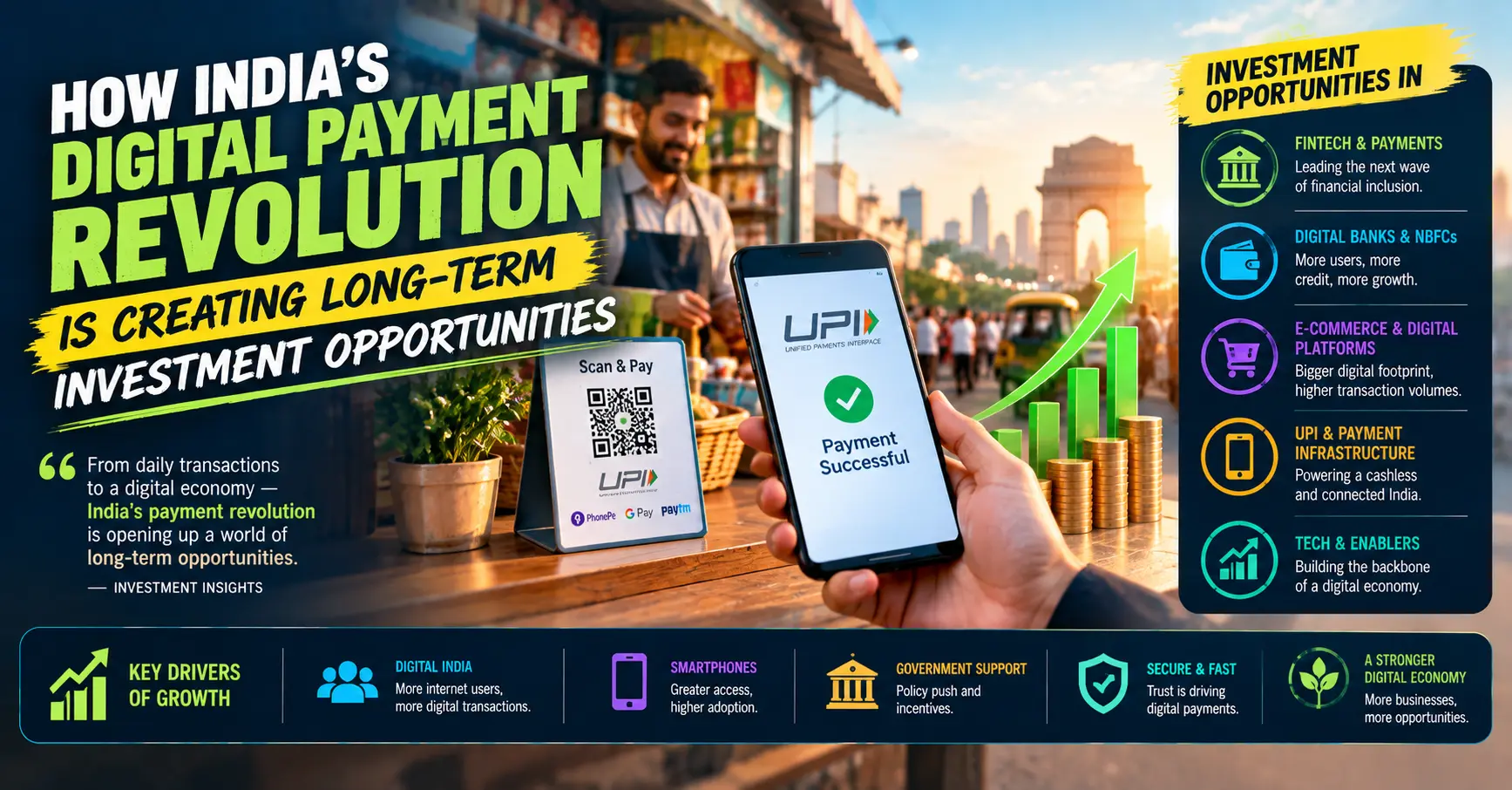
The digital payment revolution in India is no longer about moving from cash transactions to mobile-based transactions only. The use of digital payments has today grown to be a vital aspect of the economy and financial framework of the country. Be it the purchase of groceries from the local store, payment of electricity bills, or any other kind of online purchase, digital payments have today become an integral part of our daily transactions.
A Market That Is Still Growing
India’s digital payment landscape consists of UPI, cards, prepaid instruments, Bharat Connect, FASTag, and others. Based on PwC, the year-over-year growth rate of digital payment transactions in India for FY25 was 37%. The company expects the whole digital payments ecosystem to grow aggressively through FY30.
Another estimate of the market states that the payments market of India will reach about $409.9 billion in 2025 and will have a value of around $958.1 billion in 2030. Since there are various interpretations of “digital payments” and “payments market”, those figures are not to be used as comparable.
The main idea here is that the payment infrastructure of India becomes not just a technology but a big financial infrastructure.
Investment Opportunity
All banks, payment processors, fintech companies, merchant-acquiring companies, technology companies, and financial service companies in general can participate in this ecosystem.
Banks can take advantage of the increasing number of transactions taking place digitally and increasing digitization by customers of their banking products such as cards, payments, and other financial services.
From the merchant’s side, the opportunity lies in the fact that millions of small businesses now offer digital payment services. As merchants get used to the digital method of doing transactions, they can be offered additional products such as working capital loans, insurance, accounting software, and other financial services.
The major development of 2026 would be the introduction of a 0.4% Merchant Discount Rate for certain UPI merchant transactions above ₹2,000 starting from October 15. Payments between people and smaller transactions will not be charged this fee. This can open up a new avenue of revenue for banks, payment apps, and others, although the specific revenue that would come to each company depends on the fee structure.
Companies Investors May Watch
Some of the players in digital payments include banks like HDFC Bank, ICICI Bank, Axis Bank, and Yes Bank, as well as fintech/payment companies like Paytm and Pine Labs.
In addition, NPCI data reveals the important role played by banks in the UPI ecosystem, where large banks process payments as remitter bank, beneficiary bank, and payment service provider bank.
But having high volumes of payments does not guarantee that a company is an attractive investment. Investors will still have to consider the company’s valuation, profitability, competition, regulatory risks, market share, and its capacity to translate transactions into earnings.
A Long-Term Theme
Digital payments are doing more than simply providing an easy way to pay. Digital payments are aiding in bringing additional economic activities into formal channels of finance. The small merchant taking digital payments can create transaction history, while the consumers have access to more financial products through digital transactions.
This results in a more extensive financial network for digital payments.
From the perspective of the investors, the important aspect is not just the volume of transactions on the UPI. What is important is the extent to which businesses can be created based on the Indian digital financial network.
India’s payment revolution is at its nascent stages. With the growing volume of digital transactions and monetization models, the focus of businesses could increasingly shift to providing financial and technology products beyond payments.
FAQs
1. How is digital payment growth creating investment opportunities in India?
The increase in digital payments will present business opportunities for both banks, fintech companies, payment processors, and merchant services providers. As more transactions take place, there will be the possibility to provide additional services such as credit, loans, insurance, and financial services management. The introduction of selected UPI merchant fees starting October 2026 will present some sources of revenue in the payment system.
2. How big is India’s digital payments market?
It depends on the extent of the market that is being talked about. As per PwC, the overall digital payments market size in India is forecasted to be 206.1 billion transactions with an aggregate transaction value of ₹299.9 trillion in FY25 while growing to 617.3 billion transactions by FY30.
3. What companies could benefit from India’s digital payment revolution?
Some of the potential winners could be banks such as HDFC Bank, ICICI Bank, Axis Bank, and Yes Bank, apart from fintech and payments companies like Paytm and Pine Labs. The tech companies that play a role in developing the payments infrastructure could also benefit from it.
4. Why are digital payments important for India’s economic growth?
Digital payments can help promote economic development in India because they make transactions fast and simple. Digital payments make it easier for business owners to collect money and also allow many people to become part of the formal sector. Digital transactions bring down cash transaction costs and promote the formation of digital companies.
If you need guidance on how to start your stock market journey, how much capital is enough to begin with, how to do smart investing, or how to take informed stock market decisions, you can join Strategic Alpha’s ‘The Conviction Club’. This is a membership program, especially curated to help investors become aware and knowledgeable about stock market trends, news, and technical aspects, so that they can become their own experts.
Our YouTube channel, weekly webinars, and digital resources available on the website can help you learn the basics of the stock market. For regular updates on trends, one-to-one sessions with experts, and detailed learning modules, you can join the Conviction Club, which is the online community of like-minded investors sharing knowledge and thoughts to grow together.
Subscribe to the Strategic Alpha Newsletter now to get the latest updates about weekly webinars.
Join Me On My Telegram Channel Where I Share Much More Value Adding Knowledge Of Investing/ Trading: Click Here
Also, Don’t Forget To Follow Us On Our Social Media Accounts:
Facebook: https://www.facebook.com/strategicalpha/
Instagram: https://www.instagram.com/strategicalpha/
Twitter: https://twitter.com/suyog_dhavan
YouTube: https://bit.ly/2IIqztO
Disclaimer: Strategic Alpha and Suyog Dhavan are not SEBI-registered investment advisor. The content provided is purely for educational purposes and should not be construed as financial or investment advice. Viewers are encouraged to conduct their own research or consult with a SEBI-registered professional before making any investment decisions.